Showing posts with label Management. Show all posts

Wednesday, 31 August 2016

Lord of the Rings, how ‘Gandalf the Grey’ teaches us that learned helplessness is a threat in the real world

The fantasy epic Lord of the Rings takes a close look at how evil and despair seed the doom of all unless courage is found to check it! Does the “real world” need to take note?

I’m sure everybody knows the epic middle earth adventures of Frodo, Gandalf and the fellowship of epic heroes fighting the forces of the evil Lord Sauron and his cohort; the deceptively evil sorcerer Saruman!

The character Gandalf the Grey as played by Ian McKellen was a wise and powerful wizard on the side of good against such evil that corrupted the hearts of men to dominate middle earth and herald in a dark age that would have no end. In the first movie “The Fellowship of the Ring”, Gandalf was under the control of his mentor and friend “Saruman the White” who deceived and misdirected him in his quest to destroy “the Ring” of darkness that dominates all other rings given to Men, Wizards, Elves and the Dwarfs of middle earth.  

The storyline continues to a point where our hero Gandalf becomes suspicious of Saruman’s deception; confronting him in an epic battle of good versus evil. Saruman challenged by Gandalf tries to appeal to him to join him! Saruman does this by using the overarching power of Lord Sauron and how pointless it is to oppose him due to a “misguided sense of duty” to his friends and the people of middle earth. He plays on the odds of losing to try and create a sense of learned helplessness in Gandalf and weaken his resolve to oppose him. Gandalf, who appears less powerful but committed to his sense of morality cries foul of this betrayal and makes a stand regardless of the odds against him. He loses the battle but allies with other good men, elves and dwarfs to battle the dark forces opposing them, which leads our heroes to ultimate victory.

So, even in a fantasy based story like this, can we draw parallels to the real world of business? Does the use of over arching power to override core values with learned helplessness and take away hope by dominating those in important positions under such influence actually happen?

A worthy question, which is hard to answer in my view. It is definitely possible but it depends on the person, their sense of self/character, their core values and their situation in life. So here are some indicators to look out for the signs of learned helplessness and what to do in your company to be the unsung hero of the day saving it (or you!) ultimately from itself!

Be practical! Know what your company is in practice as well as on paper. Has it a hierarchical, clan, adhocracy or market culture? Where does the customer, employee, manager and leader sit in the hierarchy? Are employees engaged and listened to? Are good decisions for the greater good cheered or punished based on ethics/longer term benefit v short term cash return? If those answers are inherently negative and paint a picture where employees are treated as mindless tools in a corporate toolbox only capable of only doing their strictly enforced job descriptions, then it’s likely that learned helplessness is the only coping mechanism employees have to survive an oppressive management regime. If one reaches such an opinion from their research, it’s better to walk away from such a company, which by design eats itself from the inside out and is content with a shortened company lifecycle!

Know yourself! Be true to yourself in matters of the heart, which includes the wish to be happy! If your vocation in life lies elsewhere, giving up on where you belong because you don’t know yourself or trust your abilities is just wrong! We are all part of something bigger and will only feed the darkness by being unhappy and feeling trapped in a life we made and only we can really change! Know yourself, take responsibility for yourself and then you can change anything about your world you need to for a better future in life!

Moral Courage. A shiver goes down my spine when I think of how many times I have heard of outrageous and grievous actions taken by bad people against good people whom had leaders that lacked the moral courage to defend their people and/or position against the ill intent of the wicked! Moral courage builds your character and your reputation. It shapes your future and tests you to the ends of your beliefs and your wits! Win that inner battle and your path ahead will only get better, lose that battle and you allow the forces of darkness to roam unchallenged in a more subtle yet similar fashion to its advance in the Lord of the Rings

Priorities… where you belong. Just like the heroes of the Lord of the Rings, we should consider others before ourselves yet never stop our quest to find that place where we belong! Despite what some ‘gig economy’ proponents say, we all must find our place in this world. If working on a company’s payroll doing what you love for that company to the best of your ability, then so be it! Such a contribution is not a “cost” to any company; your above average performance is a contribution to that company as much as it is to yourself because you have found your place in life to excel at being you!

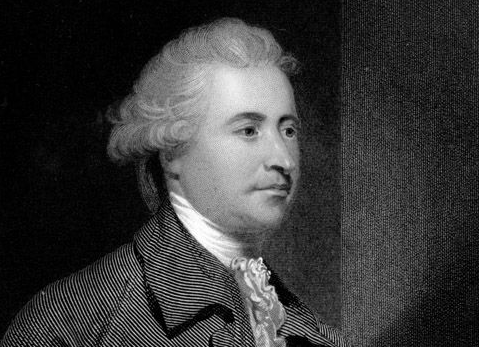
Associate with link minded peers! Edmund Burke once said; “When bad men combine, the good must associate; else they will fall, one by one, an unpitied sacrifice in a contemptible struggle.” This is as true today as it ever was, which is why doing nothing carries such a tragic cost for those too weak to dig deep and associate with linked minded peers for a greater good outcome! If you think dark self serving interests will not find you, then you are already found and under its influence. Context of situation and associated remedy is only possible through networking and peerage. Even the great “Gandalf the Grey” established a like minded peerage to succeed in life. I argue we are no different especially in today’s world.


With wealth distribution narrowing along with the tolerance for constructive dissent and sustainable business practices, thinking of the longer term consequences of our actions is as critical as it ever was! We need to carry our self past the pettiness and politics of the day to associate with like minded peers and bring back the balanced approach to love, life and the pursuit of happiness. It will carve out a sustainable future in business leaving only good intent to dwell as our proud legacy!


Sources/Credits:

Pics;

www.walldevil.com        

Credits;

Official twitter account of Sir Ian McKellen:  https://twitter.com/ianmckellen
Character Bio ‘Gandalf the Grey”: http://www.imdb.com/character/ch0000143/bio
Learned Helplessness definition: https://en.wikipedia.org/wiki/Learned_helplessness


Wednesday, 15 June 2016

Independent Thinking - Making Waves or Just Making Trouble?

Why independent thinking should not be confused with negativity or just plain trouble-making


We all love the thought of an easy life; one where we don’t worry about bills, money in our pocket or why we have to (v ‘want to’) use the bus to work in the morning! Our career journeys are often primed to identify “independent thinkers” that are destined in our eyes to interfere with our plans for a domestic utopia; with us taking remedial action at the earliest possible opportunity. This phenomenon is more common then one might think and in enough numbers can often lead to a malformed clan culture in companies where protectionism rather than visionary insight dominate the company culture and arguably its destiny…

So, in walks the fear of losing one’s job, being relegated in career progression to the guy with deeper insights and/or just not succeeding like one feels they should ‘cos that guy is just doing better…’ It may sound like a case of jealousy, but it is a herald for more serious organisational issues especially in a company(s) where leadership tends to be weak and reactive in nature.  

Needless to say, this if unchecked ends ups a management issue that can often lead to a rounding on the ‘trouble maker’ to suppress his or her “performance” or even expel them from the organisation in the name of employee satisfaction. A direct chase to the finish line of bad management practice is obviously not the way to go, which is why I would recommend to any manager the following:

Is the person in question a balanced independent thinker, a whiner/neigh-sayer or an out and out trouble maker??? You will find such issues always boil down to the initial person of interest been accused of being one or more of the three. So quick definitions of the three and what to do:

Independent thinker: Articulate, outspoken, creatively intelligent, passionate about topics and can exude an air of confidence that at times may intimidate some. Issues often arise due to misunderstandings and/or folks becoming threatened by their willingness to think and step outside of the corporate box on issues. Defying conventions can lead to ‘witch hunts’ so beware of folks trying to manipulate events to paint a person like this in a bad light. If there is ever a need for creative types, it’s in this information era where innovation happens at an ever faster rate. Direct such engagements towards mutual accepting of each other’s value to the organisation and to each other. After all, absent one, the other will be eventually be out of job when the company fails. Creative and process driven employees make a successful company in partnership with well rounded leadership of both!  

Negativity: Negative, passive aggressively forward in meetings and backbiting anybody they feel like behind closed doors. Such personalities often seek to deflect attention from themselves by targeting an outspoken independent thinker with the traits they actually display. They are arguably the master of ‘dirty politics’ and most difficult to spot as they “seem to be liked” more by the silence of others then by direct compliment. They are socially active in groups spreading gossip and an innuendo in an apparently gleeful manner. They are the proverbial ‘wolf in sheep’s clothing.’ If the person you are informed about is charged with such transgression, I recommend you evaluate the complainant as much as the initial person of interest for signs of deception and follow up for signs of social interactivity that indicate narcissism and a sense of grandiose. Getting them talking about their correctness in an issue at an appropriate time can be revealing in this regard. Be sure that after completing your investigation, the results are impartial and the real narcissist is identified as an issue, which should be symptomatically addressed in a firm manner as they will raise issues due to their inevitable (future) infractions, which affords you remedial reproach. That said, always be impartial but never forget who you are dealing with.

  
Trouble Makers: The need to see how a bad employee behaves can be subtle like the negative employee or down right threatening like the argument makers. I had a crazy guy work for me who at a team meeting in an open space with our team and two senior managers in guest attendance told me to “lay off the drugs” in a loud disrespectful manner when I talking. The counselling session afterwards lead to more verbal abuse on his part where a verbal warning was his prize. If someone makes a claim about someone you know to be like that, then be sure to not jump to conclusions but be ready to follow the prescribed disciplinary process of your company after your initial investigation is complete. The results from the investigation can start the disciplinary process. People like that are not worth the effort and arrogantly detract from a team’s effectiveness and longevity in a real way. They need to be removed and if management don’t support you on it, then find a new job!

So, you can see that independent thinkers are the lifeblood of any company's longevity but if you let bad ones in that carry the traits of negativity and/or trouble maker, then be prepared to act for everybody’s benefit and future. A “good cultural fit” often misses this at selection letting in the bad ones and keeping the good ones out. As a manager, it then becomes your problem to fix it and fix it we must!

About the author: John Mulhall is a Community Manager and newly Minted Software Developer. John is also a committed blogger and from February 2016 onwards, will be publishing blogs every second week on topics around Technology, Leadership and Sustainable Capitalism.


Sources/Credits:

Pics;


Credits:


Wednesday, 1 June 2016

Career Ambition... Moving with the times

Ensuring Adaptability and Happiness Dance with Passion and Ambition…

Are you loving Life?… So what’s next?? A promotion, a new job, hobby or even a new chapter in your life??? Or maybe none of the above??? Maybe it’s better to wait until a better time economically to think about oneself and reflect on such questions? Maybe status quo is ok?? Maybe it is.. But what is certain is that they are piercing questions, which demand exploration!!!

Too often, good folks move along Maslow’s hierarchy of needs without really thinking about what they are looking for from psychological needs to self actualisation. On that note, I recall a talk with a life coach who talked of a very successful Merchant Banker and self actualisation. He was trained at a young age as a clerk in the bank, which was led and co-owned by his father. His father, the President showed him no favour in his career making him work hard for every promotion, sometimes trying many times to get promoted until he climbed every rung of the ladder to the top of his profession as President of a Merchant Bank many decades later. He lamented to the life coach about how hard he worked and how successful he was, yet when he reached the top of the ladder, he realised the ladder was facing the wrong wall to truly fulfill him as a human being! On paper, his success was incredible yet in his heart, he felt a gap where his true passion was left unfulfilled.

A sad story of enormous success may leave some slightly confused as to why he can be sad at all? He doesn’t have to worry about a roof over his head or food on the table, right? Very true, but his success is testament to the fact that we are all human and at a human level have very similar needs in order to be whole in this life no matter who we are! We need “to be”, not “nearly to be!”, which is about remembering that life’s true bounty is in the journey, not the destination.

So how does that translate into career ambition and choice? In my view, there is a direct correlation between our work and our lives as the former is such a dominant feature in the latter. If we just follow the societal viewpoint, we will select role and compensation that reflects on what standing we think we deserve in society. In all this focus and decision making, where does happiness and passion fit? Do we dismiss it as folly or embrace it on equal terms with ambition and adaptability in a world that is changing every faster than it did before! I think it would be wise at every career juncture to map out choices in the following areas and rank them from negative to positive as one sees fit!

  • Passion: Is my passion stirring great interest in the role description and/or proposition?
  • Purpose: Do I see purpose in what is been done at the company and/or industry and/or profession? Also, does this purpose give me a “feel good” feeling that I cannot fully describe when things go well? Do we make a difference?
  • Culture: Does the company and/or industry have a culture that relates to my core values or at least does not offend nor challenge them at a core level?
  • Adaptability: Am I prepared to be adaptable to my circumstances whilst maintaining my core values as a human being? Will I think outside of the box when it comes to planning my future in a structured manner allowing me to see threats and opportunities in a clearer and more structured way?
  • Ambition: Does my ambition align to my passion, purpose, (company) culture and/or adaptability? Will it override who I am as a person or develop who I am into a better version of myself?
  • Self-Actualisation: Will all my efforts from this point on lead to me becoming successful, happy or both in life?


If your answer to the self-actualisation question is “both”, then you are truly lucky to have gained the vision to see what you want to become as a whole package and the courage to see it so! If like so many, you are effectively asked to trade happiness for success, then I leave you with a quote from Steve Jobs in his Stanford 2005 graduation speech: “If you haven't found it yet, keep looking. Don't settle. As with all matters of the heart, you'll know when you find it. And, like any great relationship, it just gets better and better as the years roll on.” When we look back on our life, we just want to see a full heart that was made whole by our decisions in the here and now. We are the culmination of these decisions and who we are should ultimately reconcile with who we want to be. When they reconcile, we take our place in this world as we have seen ergo our legacy is not an echo of what could have been!


Sources/Credits:

Pics;


Credits:

Maslow’s Hierarchy of Needs by Simply Psychology at http://www.simplypsychology.org/maslow.html
Steve Jobs quote from Standard Speech in 2005 by Goodreads.com at http://www.goodreads.com/quotes/445070-if-you-haven-t-found-it-yet-keep-looking-don-t-settle


Wednesday, 18 May 2016

Employee Churn - Finding the Curve

How relationships can help you find the curve drivers for employee churn

The old saying “employee's leave a bad manager, not a bad company” may have allot of truth to it but it’s not the full story.  A leave decision by an employee is often made after considering a wider set of criteria internal and external to the company including points of a more personal nature.

Did you ever note that exit interviews often provide a “nice” picture of the company by the exiting employee with a less flattering account on Glassdoor? This begs the question, what drives an employee to leave the company? Bad Manager? Sure.. this is a regular reason but not the only one… What about role, environment, organisational structure, peers, subordinates, other “silos” in the organisation, customers, 3rd parties, under use of talent, over use of talent and of course compatibility with company culture??? Do they factor in the decision to leave?

Forbes ran an article producing employee survey results where 31% of chronically overworked employees thought of leaving the company for another job and 15% of employees who ranked company culture poorly were of the same mindset. So, spinning up the correlation engine, what element has a strong correlation with everything else in the decision for an employee to leave? “Relationships” is the answer. How they are structured is critical to understanding and addressing the reasons for employees leaving, which range from small issues to structural issues within the organisation.

Does the fix sounds like a big task? It sure does but if you approach it from an angle of starting with the end in mind, you will see how your organisational structure, management style, business process management infrastructure, leadership styles, environmental management (Facilities & HR) and resulting company culture impact the employee’s ability to conduct and maintain relationships in the workplace. Contrary to popular belief, a normal person does not want to be a millionaire at all costs, they want to be happy by making a positive impact on their company and society in general. In order to be happy, an employee needs to be reasonably able to maintain relationships in support of this overall disposition within their company’s paradigm of existence. This is where relationships come in with peers creating a good atmosphere and managers/leaders supporting this through consultative leadership. This includes tactical delegation of the appropriate amount of tasks that are framed in a genuine manner as meaningful and important to the company. Many overlook this due to “been busy”, which is counter productive as a valuable employee moving on will make the leader even more busy coping with the loss of the employee and filling their shoes in an unplanned manner! Good leaders count as does a good company.

In my quest for understanding in new leadership roles over the years, my high level approach implementing the above in a functional role has been the following:
  • Know Your Team -   Know your team, what frustrates them, what makes them happy and what creates obstacles in getting the job done (start with the end in mind)
  • Know Who Interacts with your Team - Introduce yourself to management and leadership peers, find out what makes them happy, excited, frustrated and sad. Find out how they interact with your team
  • Understand the process - understanding the business processes around what your team does and how it interacts with the company internal and external to customers and 3rd parties noting bottlenecks, inefficiencies and pain points for your team
  • Research the Company culture and organisational structure - from experience there is no real point in creating an adhocracy sub culture in a company that has a dominant dictatorial culture. You will only be targeted at best by other “silos” if you succeed and it could send your team into even more disarray if you fail. Loosely align best practice to culture before you start to make changes as this factors into the happiness (& productivity) of your employees.
  • Be a genuine leader - I have met many pretend leaders who care only for their own interests and come across as fake leaders out for themselves. Don’t be that guy, your employees cannot have a genuine relationship with a fake leader!
  • Build together - as a believer in consultative leadership, I can tell you from experience that sustainable processes which work are built when collaboration (versus coercion) happens within a team in developing a process from the ground up. Its acceptance and deployment are far more successful then when a process is designed and deployed by force upon a team. We need to feel important in our roles and employees feel the same way, which is why inclusion not imposition needs to underpin any new team venture. After all, we need to know that what we do matters!


It’s a hard sell to some and an easy sell to others based on belief and leadership orientation. Even if you reject the above approach, just be consistent with your approach knowing that relationships are key to employee retention. If you do, you become more effective from the get-go leaving rest up to you…

About the author: John Mulhall is a Community Manager and newly Minted Software Developer. John is also a committed blogger and from February 2016 onwards, will be publishing blogs every second week on topics around Technology, Leadership and Sustainable Capitalism.

Sources/Credits:

Pics;


Credits;