Showing posts with label #Planning. Show all posts

Tuesday, 23 December 2014

It’s the season to be Jolly… and to be planning…

There is ‘financial planning’ and then there are your ‘real plans!’ 



We always marvel at the Financial Planning and Analysis (FP&A) guys when they roll out big company budgets based on “actual numbers”. Oh joy to the world everybody; they did it again! We now know how much we can’t spend! So, with a spring in our step thinking about what Santa will bring us, we can just about make do with our budget allocation for the oncoming year knowing our bosses will be expecting to see us deliver more for less in an eternal cycle that somehow caught the catchy title of ‘productivity’.

It’s a well documented fact that companies who are able to resource their changing strategies will be more successful then those who are not. McKinsey & Co asserts that a company who can reallocate resources to support its strategy will be worth 40% more (after 15 years) then a company who does not reallocate its resources through formal and informal means.


So, bearing the above in mind especially when timing and funding matter, what are your new-year planning options between festive chocolate and latte treats at your workplace?

Vision – Are you sure about where your company is going with the business and does your vision for your department and/or team lock in with this overall vision?

Planning Disjoints – We all love the FP&A guys; they mail us once a month and may visit us annually if we are “lucky”. However, the less interaction with the planning guys, the bigger risk we run of our plans not matching their funding assumptions as part of their process.

Fundamentals – If our budget allocation from Corporate does not match our needs, we need to raise flags on oncoming years productivity. If we cannot fund our functional obligations, we need to kick it up for review straight away so the senior team can review the facts and make a judgement on the following years budget additions and/or productivity cutbacks.

Non-Fundamentals – We are all expected to deliver more with less. It’s a fact of life that cost matters especially when companies are in a competitive marketplace with tight margins. If problems that could be solved with formal funding exist but lacking any budget for them; why not bring the problem to your team. Brainstorm with the real subject matter experts on out of the box solutions.

Informal Projects - Be careful of projects without a scope statement, a sponsor you don’t have “real access” to and no project budget. Informal projects are classic honey traps with functional managers keen to learn about project management but end up having their existing functional resources sucked into a project that is not properly planned or resourced. If you do take on an informal project, I suggest mapping out the needs it presents upfront and the staffing impact it will have, which are normally the first stress points when functional and project responsibilities clash. You can then assess the most effective solution for the criteria at hand noting if its not feasible, it needs to be returned to whence it came. Management buy in is critical so if they want it, they will need to resource it.

The value proposition - When reviewing one’s function, why not see how you are spending company resources. Could it be done in manner where greater value can be reaped for the expenditure?  Too often, we cut costs to save money not fully understanding the value proposition the expenditure brought to our function and the wider company. Taking the time to physically map out our budget lines to the operational elements with assigned benefits and risks is a worthwhile endeavour.
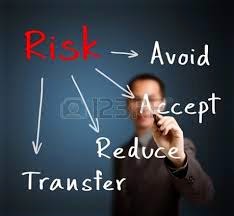
Risk – When planning for the operational year to come, another good team exercise is to map out the financial risks (to company’s finances and/or calculation thereof), operational risks (financial/non financial risks occurring as a direct result of operations) and business risks (wider non financial risks generally speaking) that occur. They should be mapped into categories of risk, ranked for risk impact and probability using methods like traffic lights/Low, medium, high/0% to 100% along with prescribed remedies (avoid risk/accept risk/reduce risk/transfer risk). This information should illuminate foreseeable risks as a working register of risk; giving sight to what the year will bring in threats, opportunities, strengths and weaknesses.

When we think in depth about our function’s short-term future, try to remember its impact on our medium to long-term view. If you do, then a more sustainable thought process will formulate and give rise to a more sustainable approach leaving a stronger set of plans for the year to come. Also, when you are on top of your future, the Eggnog in the fridge at home has to taste better! YUMMY!


So, on that happy note, I would like to wish you all a very Happy Christmas and a prosperous new year! May good tidings be with you and yours always! Please stay tuned for my next blog publication in early January 2015!


Sources/Credits:

Pics;


Credits;


Monday, 20 October 2014

Innovating for Tomorrow..

Can it really be done?


When talking about his views on innovation, Steve Jobs famously referenced Ice Hockey legend Wayne Gretzky when he said “There's an old Wayne Gretzky quote that I love. 'I skate to where the puck is going to be, not where it has been.' And we've always tried to do that at Apple. Since the very very beginning. And we always will.” There is no doubt that Steve Jobs was remarkably insightful in his vision for the future of Apple and through his vision, great products like the iPhone were born against the backdrop of great risks in their development which could have ended the giant corporation we know today.


So, is Steve Jobs part of small cadre of visionary leaders who can see where “the puck” is going to be, or is there a science and logic behind his mastery of innovation that everybody could use?

Firstly, when thinking innovation and where the ‘puck will be’, we need look at environmental risks in markets, what trends, etc. People tend to looks inwards, not outwards for their first and often most impacting source of information, which is ‘their gut”. Intuitive bias can be powerful if balanced against good environmental data analysis and an in-depth understanding of internal process, market/industry practices, wider environmental factors that impact the market place and how they all interact with each other. It is important to find this balance so one’s intuitive thoughts can be based on current facts, rather then assumptions reached through deductive reasoning based on past experience.

Armed with researched knowledge, an understanding of the company’s current operational state and the interacting markets one does business with, we should gain some tentative foresight of how the marketplace will act in the short to medium term assuming no product, industry or market disruption takes place. It is a good idea to map the elements from the top down out in a multi layered process flow map using time as the axis of advance, noting the relevant milestones and events that define the operating environment.

If ‘many hands make light work’, then ‘many minds make power a better look’. Try to bring in trusted and qualified business and technical experts to brainstorm new product concepts in a group setting with sharing/analysis of the above to give rise to an in-depth exploration of the newly created maps projecting a course and trajectory over the short to medium term through direct analysis and scenario planning.  It is however important to manage the group process and insert controls to keep the group input balanced and allow less dominant members to contribute meaningfully. After all, if all are chosen well, all should input positively for that reason. 


Outcomes from an analysis session should complete the map of the future where the industry(s) are evaluated in terms of course progression, how they would interact with a possible ‘X’ disrupter at product, product line and industry level along with how it would affect complementary product lines and industries? Also, what external interactions (regulatory, etc.) would take place and how it would map out as the axis of time progresses? It’s important to take a wide view using multiple scenarios ranking them in probability so opportunities via product innovation can be defined with an initial understanding of how feasible the market conditions will be to support such development. The follow on actions would be the starting point for project proposals in new product development based on this new and ranked foresight of actionable market wants and needs.


Its important to stress the above steps are very high level and great attention to detail is needed when exploring how and where the “puck” will be. The game of chess we call life has many unforeseen circumstances which we need to account for as best we can.  Whilst we can to a certain degree of accuracy map out where the puck will be with insightful and skilled colleagues collaborating in a high functioning and well-led group, we cannot replicate the savant like abilities of Steve Jobs who appeared to take the short cut to the same place innovating earlier, developing earlier and getting to market with products that delight customers to this very day. That said, process may not replicate the savant like brilliance of people like Steve Jobs, but it does a good job at replicating a close second in-terms of outputs, which I’m sure Steve Jobs would be proud of.


Sources/Credits:

Pics:


Credits:


Tuesday, 9 September 2014

Europe, the “tick-tock” of economic recovery...

Is Europe’s recovery a sustainable one?


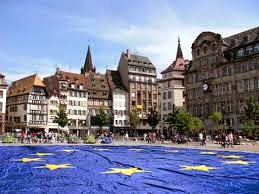
We all know of Europe’s economic recession and the Euro chaos that hit periphery countries like Ireland, Greece and Portugal since 2008. The slide in living standards, sky-high unemployment and governments in constant disagreement could do more to allay our fears for a better future.

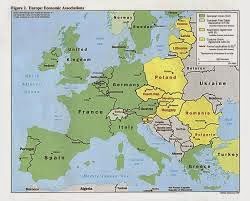
So, now looking at some recent metrics, domestic demand is expected to grow real GDP by 1.4% in 2014 and 1.7% in 2015, which of course is positive. May’s figures showed an unemployment rate ranging from Spain’s 25.1% down to Austria’s 4.7%. Unemployment in the Euro area was at 11.6% and the European Union as a whole was at 10.3%. The PMI composite index is at 52.8 in June, which is slightly down from May but continuing to signal expanding economic activity (50+ is expansion). Inflation is expected to remain stable around .5% to 1% for the foreseeable future. It’s also also noteworthy to think of all this and the size of the European Union, which is at 505 million people over 28 sovereign nations.

So, after an awful 7 or so years, we Europeans are on the road to recovery, but is it sustainable and will it succeed? In thinking about this question, one should consider the following points as material to the answer.

Debt Burden. The debt shouldered by sovereigns to support the banks and their blistering mistakes over time has left many countries in great crises with austere fiscal adjustments hitting their societies extremely hard. The OECD being the most optimistic predicts EU “Debt to real GDP” by 2020 will be at 160% with the EU Troika’s target of 134% heralded as untenable assuming current real GDP growth rates (c.1.5%) continue. Countries will struggle across the euro zone with debt as a result, especially those who are not competitively structured for inward investment in their economy. Currency devaluation once sovereign structural and policy upgrades are complete should be considered if there is still a “debt lag” in the economies of the sovereigns.


Investment. For Europe to recover sustainably, countries that are not competitively geared up for recovery, need to pursue policies of reform making commercial development of new and established business easier with more effective regulation replacing out-dated regularly practices. They also need to address key issues like overly bureaucratic processes in some areas, lack of regulation in others, corruption and plan for strategic growth areas such as exports and domestic consumption.

War. The rising threat posed by a seemingly deceptive Russia along with unstable Middle Eastern countries has raised the priority of defence spending in Europe once again and the need for defence investment. The requirements in Europe in partnership with NATO partners like the US raise numerous security concerns that will need funding and resources. The fiscal pressure given the debt burden of the region should be weighted against the projected fiscal cost associated with risks of increased asymmetrical attacks on EU soil, damage to reputation and business affecting investment and industry alike.

Energy. Europe’s scope for economic stagnation should not be overlooked when you think of how paralysing an energy crisis can be even in gas. Manufacturing is heavily dependant on energy and water to function and grow. Without it, the wheels of our European economic recovery will grind to a halt. Consideration to multiple vendors for gas should given noting Germany already has such arrangements in place.


Political Relations. Russia, China and the host of issues with sovereigns in the Middle East impact the trajectory curve of Europe’s recovery. The export market for Europe requires stability and for stability to be sustainable, the resolution of many geo political conflicts and issues is of utmost priority. Without it, the key export markets for the EU will be in vulnerable to destabilising world forces interrupting international trade via conflict and/or improper trade conduct.

US. The stalled free trade EU-US deal (TAFTA) is the highlight here, which has huge positive and negative potential for the EU.  The US is a key trading and security partner with Europe and cross Atlantic cooperation with the US should continue to secure lucrative deals such as “TAFTA”.  That said, sovereign rights should not be overlooked given the ambition of some lobbyists to have rights of dictation to nations on what laws are permissible and what are not. In essence, for a sustainable recovery in Europe, any deal must create a value spread to the regional societies and not extract value from said societies.


We have a long road to economic recovery in Europe but have made considerable progress with forward signs signalling the economic momentum is increasing within the Union. However, to be sustainable, we need to address our deficiencies, build on our efficiencies and remember the welfare of our children’s children when building a sustainable tomorrow today!


Sources/Credits:

Pics


Credits