Showing posts with label #Public. Show all posts

Tuesday, 9 September 2014

Europe, the “tick-tock” of economic recovery...

Is Europe’s recovery a sustainable one?


We all know of Europe’s economic recession and the Euro chaos that hit periphery countries like Ireland, Greece and Portugal since 2008. The slide in living standards, sky-high unemployment and governments in constant disagreement could do more to allay our fears for a better future.

So, now looking at some recent metrics, domestic demand is expected to grow real GDP by 1.4% in 2014 and 1.7% in 2015, which of course is positive. May’s figures showed an unemployment rate ranging from Spain’s 25.1% down to Austria’s 4.7%. Unemployment in the Euro area was at 11.6% and the European Union as a whole was at 10.3%. The PMI composite index is at 52.8 in June, which is slightly down from May but continuing to signal expanding economic activity (50+ is expansion). Inflation is expected to remain stable around .5% to 1% for the foreseeable future. It’s also also noteworthy to think of all this and the size of the European Union, which is at 505 million people over 28 sovereign nations.

So, after an awful 7 or so years, we Europeans are on the road to recovery, but is it sustainable and will it succeed? In thinking about this question, one should consider the following points as material to the answer.

Debt Burden. The debt shouldered by sovereigns to support the banks and their blistering mistakes over time has left many countries in great crises with austere fiscal adjustments hitting their societies extremely hard. The OECD being the most optimistic predicts EU “Debt to real GDP” by 2020 will be at 160% with the EU Troika’s target of 134% heralded as untenable assuming current real GDP growth rates (c.1.5%) continue. Countries will struggle across the euro zone with debt as a result, especially those who are not competitively structured for inward investment in their economy. Currency devaluation once sovereign structural and policy upgrades are complete should be considered if there is still a “debt lag” in the economies of the sovereigns.
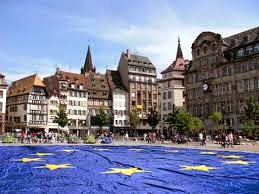


Investment. For Europe to recover sustainably, countries that are not competitively geared up for recovery, need to pursue policies of reform making commercial development of new and established business easier with more effective regulation replacing out-dated regularly practices. They also need to address key issues like overly bureaucratic processes in some areas, lack of regulation in others, corruption and plan for strategic growth areas such as exports and domestic consumption.

War. The rising threat posed by a seemingly deceptive Russia along with unstable Middle Eastern countries has raised the priority of defence spending in Europe once again and the need for defence investment. The requirements in Europe in partnership with NATO partners like the US raise numerous security concerns that will need funding and resources. The fiscal pressure given the debt burden of the region should be weighted against the projected fiscal cost associated with risks of increased asymmetrical attacks on EU soil, damage to reputation and business affecting investment and industry alike.

Energy. Europe’s scope for economic stagnation should not be overlooked when you think of how paralysing an energy crisis can be even in gas. Manufacturing is heavily dependant on energy and water to function and grow. Without it, the wheels of our European economic recovery will grind to a halt. Consideration to multiple vendors for gas should given noting Germany already has such arrangements in place.
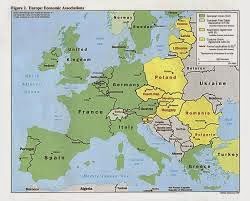


Political Relations. Russia, China and the host of issues with sovereigns in the Middle East impact the trajectory curve of Europe’s recovery. The export market for Europe requires stability and for stability to be sustainable, the resolution of many geo political conflicts and issues is of utmost priority. Without it, the key export markets for the EU will be in vulnerable to destabilising world forces interrupting international trade via conflict and/or improper trade conduct.

US. The stalled free trade EU-US deal (TAFTA) is the highlight here, which has huge positive and negative potential for the EU.  The US is a key trading and security partner with Europe and cross Atlantic cooperation with the US should continue to secure lucrative deals such as “TAFTA”.  That said, sovereign rights should not be overlooked given the ambition of some lobbyists to have rights of dictation to nations on what laws are permissible and what are not. In essence, for a sustainable recovery in Europe, any deal must create a value spread to the regional societies and not extract value from said societies.


We have a long road to economic recovery in Europe but have made considerable progress with forward signs signalling the economic momentum is increasing within the Union. However, to be sustainable, we need to address our deficiencies, build on our efficiencies and remember the welfare of our children’s children when building a sustainable tomorrow today!


Sources/Credits:

Pics


Credits


Friday, 5 September 2014

Ireland’s Economy – 92 years older but is it 92 years wiser?

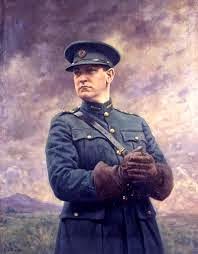
Did Michael Collins 92 years ago deliver a vision of a better tomorrow we can realise today?


In August 1922, 10 days before his tragic death, one of modern Ireland’s foremost founding fathers General Michael Collins said at the funeral of a fellow founding father Arthur Griffith “Our object in building up the country economically must not be lost sight of. That object is not to be able to boast of enormous wealth or of a great volume of trade for their own sake. It is not to see our country covered with smoking chimneys and factories. It is not to show a great national balance sheet, nor to point to a people producing wealth with the self-obliteration of a hive of bees. The real riches of the Irish nation will be the men and women of the Irish nation the extent to which they are rich in body and mind and character."


When we think of his comments in such times, we think of a long guerilla war with the British Empire in the achievement of a measure of Irish independence and a subsequent civil war; which tested all of Ireland’s leaders in ways unheard of today. Even through the violence, tension and daily tests of courage, Michael Collins never lost sight of the future state of Ireland and her economy as a free nation in the civilized world.

Since Michael Collins passing in 1922, Ireland’s economy has gone through three episodes of extreme debt burden. The first being the crippling war debt (1923-1924), the second spurned by the oil crises and government overspending (1970s-1990s) along with the third being the Euro banking crises (2008-2014). These times have heralded the onset of economic havoc in varying degrees which leaves us with a clear message ‘if we don’t seriously consider the wider implications and longer term consequences of our actions on our fellow man, then our fellow man will end up paying for our short sightedness.’ It is something I think Michael Collins considered in the above quote and one we should not loose sight off in the continuing creation of a sustainable society that balances fairness with ambition in the context of today’s rapidly changing world.

Bearing the above in mind, we would be wisely counseled to consider the following points in the formulation of company policy as much as public policy; given both in aggregate affect our common future in the short, medium and long term.

Longer Lenses are needed in planning. It is not really acceptable to think we can sustainably guide businesses and countries with anything from six month to five-year plans. Strategic planning sessions need to think in terms of strategy execution (to 6 months), medium term planning (to 5 years), long term planning (5 years +). The Chinese see long term strategic planning as an investment and have being known to have 30 year strategic plans which they actively work on by following up on them; importing long term planning elements into their medium term planning sphere as time passes.

Operating Effectiveness needs to be assessed through an objective lens of evaluation where opinions are verified through effective monitoring and reporting structures including KPIs, Audits, Management Reporting and a well thought out quantification of employee performance in key areas like skills, performance, personality and cultural fit. If you don’t have the right people wholly fitting into the right roles, then your ability to truly reach your goals becomes inhibited by the variance created in your approach to operating effectiveness.

Prioritization should be done on the basis of what is critical to the longer-term plans as much as the short term outlook. If a longer-term priority will introduce a sustainable value-creating element into the mix, then stakeholders should be onboard given they have already bought into the overall vision.

Remember who your customers are. The economy has lent great opportunities to our society and some have disproportionately gained from it through good luck, hard work and great timing. Its important for those whom are successful to remember their success comes from the greater public platform to which their success is directly or indirectly based upon. Reciprocation through ethical and socially aware business practices does not inhibit the successful; it allows them to bring everybody with them on their journey making it a sustainable venture. After all, shortest route travelled ends the quickest and misses all the opportunities that lie in a slightly longer route to a better destination.

Some say we are destined to repeat our mistakes and maybe we are! However, if Michael Collins can under extreme circumstances envision a better tomorrow, then why cant we freemen of today do the same adding brush strokes to the picture Collin’s painted for us all bringing a better future for all our children yet to breath life in this world?


General Michael Collins RIP - 1890 - 1922


Sources/Credits:

Pics:


Credits: