Monday, 27 April 2015

Cloud Technology… is it really here? Well is it?

Solutions are becoming more streamlined, but where is it all going?



Last Saturday saw me at a Microsoft Azure “boot camp” where I chatted with some very talented industry professionals and listened to their opinions on the “new” Microsoft Azure! It was worth my while rising early on Saturday to go there and hear some of Microsoft’s senior Engineering talent talk about the new Azure and how it will make development life easy from Websites to MVC web Apps to Cloud Services. Impressed by their presentations, it got me thinking about where Cloud is going and how Microsoft’s latest offering in high level terms is similar enough to that of AWS in particular given its notable improvements in virtualisation functionality and an impressive ease of development which AWS should take note of in my view.


Whilst Microsoft, AWS and all cloud computing competitors have put allot of thought into their offerings, differentiation can be difficult thus deciding what is good for you and/or your business can be a hard task for even the informed developer and/or business owner.  There is no doubt that the major players have a good support structure in place to help businesses decide but ultimately, it comes down to the cost benefit of the value proposition when placed against a company’s need for consistency, availability and partitioning of transactions in their data management plans. Knowing what you want in detail before looking for value in a Cloud partner is key to getting what you need to be successful in your use of cloud computing! In short, know your data management requirements inside out and then go look for a cloud provider!

My mind then moved onwards thinking about the future and how these marked improvements will feature in marketplace and competitor reaction as the competition cycle keeps on turning. A couple of things came to mind, which I would like to share with you as possible “watch that space” points for the short to medium term future:

Data convenience: As in life, there is a continuing shift in business towards convenience.  A hallmark of cloud systems in PaaS and SaaS in particular is that it’s controlled more by the provider then you as the customer. As convenience is the keyword, you don’t have to do your own updates, manage your security, etc. IaaS is a little different in that your use of virtual machines requires more maintenance from your IT guys but offers great flexibility at the cost of a little convenience. The details make it a powerful product type, in which AWS and Microsoft are key players.

Trust: Given the high performance rates and availability track records of the major providers to-date, trust is building in cloud computing that is leading to more and more “trusted” use by consumers and business alike. These increasing usage levels has higher business and operational risk weightings, which has being retained or off the table for any cloud solution in the past. Trust earned is making convenience a unique selling point for cloud solutions!

Databases: The industry’s wary welcome of NoSQL in particular is starting to mature into an embrace that sees database and network storage solutions develop at a faster and faster pace. The big sell for SQL and relationship databases (RDBMS) has always being its “relational” features in SQL that allows analysis and joins with data in schema tables to happen gleaning insights for the business who uses RDBMS’s wisely. This has being the way for many decades since Oracle V2 with NoSQL now getting the positive attention it deserves. Its development into cloud has given it a good grounding for large network benefits that are getting better and better by the day, from large parallel computing jobs where huge amounts of data are processed in a short period of time to the narrowing of the bridge between SQL (i.e. Relational) and NoSQL (i.e. Non-Relational). The latter is the more recent development with great improvements reaching market like Drill and Data Lake, which are effectively narrowing the relational and non-relational divide making modelling, management and SQL “like” querying more integrated, useful and flexible to user needs. This handing of power into the hands of the user is why I think database and storage solution technology will eventually migrate into a single interface and storage management system? Who gets there first with a fully functional “one stop shop” for your truly centralised storage solution needs from one user interface? Well that’s anybody’s guess!!

Security: Security is always an issue when you are ‘trusting’ your cloud provider to take care of your data. The ability to get hacked is always present but so is the growing and evolving expertise of the cloud providers who have shown a capability that is certainly making “hacking” a more difficult and faster changing occupation. It’s a never-ending battle between hacker and provider, which indicates to me that the ability to maintain data integrity from hacking will be a keynote element in the progression of cloud technology. Consider this, if a cloud technology titan like AWS could be hacked and brought to its knees, the consequences in business terms would be catastrophic for whole industries, never mind whole companies!


The responsibility that cloud providers take on in the war against hacking is a grave one and to date, their success lies in the preservation of their network’s integrity, which has opened an impacting gateway for society’s data management needs! Least they fail; we all fail… best they succeed and we all succeed in maintaining a key part of our infrastructure in society’s continuing journey!

So if increasing trust is matched with more developed risk management approaches in using a fast developing platform for our data needs, I submit that our flexibility as a society can rest upon such an axiom and enable great things in the years to come!

Do leave your opinion on cloud technology in the comments section… I would love to get your take on the newest arrival to our digital world!


Sources/Credits:

Pics;


Credits;


Microsoft for its presentation of Microsoft Azure during the “Azure Boot Camp!”

Monday, 20 April 2015

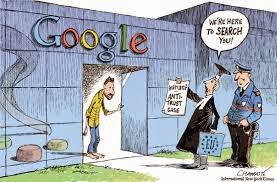
Google… Market Monopolist or Anti-Trust Victim…

Anti-Trust Accusations by Europe, it is telling… but what of??


We all know and love Google search! Its useful results made Google the No. 1 search engine based on a its simple premise of returning sites in searches that are most recent, most used and most relevant.

So what has landed Google in trouble in Europe? The EU regulator this week is charging Google with a breach of their Anti-Trust laws through unfair favouritism of it own e-Shopping services by returning them in Google search engine results before competition like eBay, Expedia, TripAdvisor and Amazon.  If successful, this apparently tactical charge (Shopping Services) may open up Google to further charges from the EU Regulator noting the Regulator has already opened an investigation into its Android platform following complaints about alleged abuse of market power in deal setting for the platform, which requires Google apps to be pre-installed and pre-set including Google search engine. 

The truth will have to be gleaned by the regulator and the EU commission, as it’s very unclear to me that their search engine business practices meets the criteria for ‘search engine bully’ as is implied by the allegations made in this case. Microsoft had an unapologetic policy of Windows only and was quite ruthless in its pursuit of control in the market place making the 2000 Anti-Trust case very visible and justifiable. Google on the other hand have a more-cloudy position where their priority search engine technology allegedly returns its own shopping services first. Does it? I tried to see if I was shunted into a ‘Google shopping cart’ in the search engine. The screen shot result below doesn’t quite tally with the allegations.


95% on average of all Google search engine users don’t go past the first page, so even if this is true, isn’t the user going to see the most popular visited sites as quickly as they will see Google shopping sites? In fact, when I Google’d “eShopping” today, I got American Airlines for some reason coming up trumps in this key search word. No sign of Google shopping services per the allegations. So the cloudiness continues…

Google has had prior issues in Germany in the past about redirects to articles in newspaper websites from Google search engine. They were being done without newspapers like Der Spiegel getting a per click payment for the view of the article referred from Google. What they failed to realise is that nearly 90% of the traffic on their site came from Google. When the regulator sided with the complainant, Google simply shut down in Germany and the business impact on lost digital revenue sent shock waves through the country that led to reversals of decisions through “exceptions”, which lifted rulings that financially impacted Google allowing traffic to reopen whilst saving face for European politicians and regulators alike. In my view, a lack of in-depth understanding on behalf of the Complainants, Politicians and Regulators alike led to a “storm in a teacup”


Bearing the above in mind, my advise to Europe’s current Anti-Trust Chief Margrethe Vestager is to not reach a final opinion on culpability until the following is fully understood:
  • ·      Complainant(s) complaint and true motivation for the complaint. Also, do they fully understand the implications of their complaint?
  • ·      Technical area affected by the complaint, is it fully covered and fully understood by the senior regulatory team?
  • ·      Business impact of the changes “needed” from Google?
  • ·      Business impact of the changes “needed” on the complainants including a suspension of service by Google? It could be surprising to see how Google actually supports the complainants bottom line so in actuality, the claim that Google is using monopoly power to suppress their business may turn out to be incorrect. Google’s presence may actually support their business and without the digital connectivity of services through Google, they may suffer a loss in business rather then a gain in business through Google’s absence or inhibited service to current offering.
  • ·      Business impact on wider community if Google’s service was forcibly altered? What is the impact of any outcomes including business impact of any forced changes and precedent setting for any future complaints succeeding against this Internet search giant?


To Google’s CEO Larry Page, I would advise the following in relation to this case:

  • ·      An objective internal investigation is always a must when confirming the actual state of play on an issue V what senior executives “think” is going on. It’s not a question of trust it’s a question of verification and integrity of position taken.
  • ·      Understand the issues along with the interests of the complainants and the regulator. Also, understand how both parties interact with your business in its entirety
  • ·      If there is foul play on Google’s part that leads to unsustainable practice even for short term gain, find it and end it noting the key instigators whom use a taker mentality in overreaching for personal gain, which is in contradiction to ethical practice and company culture that Google certainly appears to embrace! Include the regulator in your investigation and findings. Show you are serious about protecting the rights of others in your role as a dominant market player
  • ·      Approach the regulator with a collaborative rather then confrontational mentality. Your chances of a “win-win” success even in the face of provocation are higher when you use interest based negotiation techniques within a collaborative approach. 


There is no doubt in my mind that the EU has a responsibility to protect its citizens from unscrupulous corporate entities that seek to profit of Europe to the detriment of its inhabitants. This applies to smaller players looking to use regulators to knock the competition as much as it applies to dominant players who abuse their position to profit at the detriment of community they claim to serve. Does Google fit this profile of a “market abuser”? I think the truth rests with the regulator and the completeness of their investigation. My own view based on watching Google culture for some time and noting the talent it retains is not consistent with Google being a “market abuser”. However, keeping an open mind, I shall be keenly following the case.  Am I wrong in my current opinion? Will I have to change it as more facts come to light? Let me know your thoughts...


Sources/Credits:

Pics;


Credits;


“Chanate” for International New York Times in the cartoon sketch of EU Anti trust warrant served on a Google building.