Showing posts with label Strategy. Show all posts

Wednesday, 31 August 2016

Lord of the Rings, how ‘Gandalf the Grey’ teaches us that learned helplessness is a threat in the real world

The fantasy epic Lord of the Rings takes a close look at how evil and despair seed the doom of all unless courage is found to check it! Does the “real world” need to take note?

I’m sure everybody knows the epic middle earth adventures of Frodo, Gandalf and the fellowship of epic heroes fighting the forces of the evil Lord Sauron and his cohort; the deceptively evil sorcerer Saruman!

The character Gandalf the Grey as played by Ian McKellen was a wise and powerful wizard on the side of good against such evil that corrupted the hearts of men to dominate middle earth and herald in a dark age that would have no end. In the first movie “The Fellowship of the Ring”, Gandalf was under the control of his mentor and friend “Saruman the White” who deceived and misdirected him in his quest to destroy “the Ring” of darkness that dominates all other rings given to Men, Wizards, Elves and the Dwarfs of middle earth.  

The storyline continues to a point where our hero Gandalf becomes suspicious of Saruman’s deception; confronting him in an epic battle of good versus evil. Saruman challenged by Gandalf tries to appeal to him to join him! Saruman does this by using the overarching power of Lord Sauron and how pointless it is to oppose him due to a “misguided sense of duty” to his friends and the people of middle earth. He plays on the odds of losing to try and create a sense of learned helplessness in Gandalf and weaken his resolve to oppose him. Gandalf, who appears less powerful but committed to his sense of morality cries foul of this betrayal and makes a stand regardless of the odds against him. He loses the battle but allies with other good men, elves and dwarfs to battle the dark forces opposing them, which leads our heroes to ultimate victory.

So, even in a fantasy based story like this, can we draw parallels to the real world of business? Does the use of over arching power to override core values with learned helplessness and take away hope by dominating those in important positions under such influence actually happen?

A worthy question, which is hard to answer in my view. It is definitely possible but it depends on the person, their sense of self/character, their core values and their situation in life. So here are some indicators to look out for the signs of learned helplessness and what to do in your company to be the unsung hero of the day saving it (or you!) ultimately from itself!

Be practical! Know what your company is in practice as well as on paper. Has it a hierarchical, clan, adhocracy or market culture? Where does the customer, employee, manager and leader sit in the hierarchy? Are employees engaged and listened to? Are good decisions for the greater good cheered or punished based on ethics/longer term benefit v short term cash return? If those answers are inherently negative and paint a picture where employees are treated as mindless tools in a corporate toolbox only capable of only doing their strictly enforced job descriptions, then it’s likely that learned helplessness is the only coping mechanism employees have to survive an oppressive management regime. If one reaches such an opinion from their research, it’s better to walk away from such a company, which by design eats itself from the inside out and is content with a shortened company lifecycle!

Know yourself! Be true to yourself in matters of the heart, which includes the wish to be happy! If your vocation in life lies elsewhere, giving up on where you belong because you don’t know yourself or trust your abilities is just wrong! We are all part of something bigger and will only feed the darkness by being unhappy and feeling trapped in a life we made and only we can really change! Know yourself, take responsibility for yourself and then you can change anything about your world you need to for a better future in life!

Moral Courage. A shiver goes down my spine when I think of how many times I have heard of outrageous and grievous actions taken by bad people against good people whom had leaders that lacked the moral courage to defend their people and/or position against the ill intent of the wicked! Moral courage builds your character and your reputation. It shapes your future and tests you to the ends of your beliefs and your wits! Win that inner battle and your path ahead will only get better, lose that battle and you allow the forces of darkness to roam unchallenged in a more subtle yet similar fashion to its advance in the Lord of the Rings

Priorities… where you belong. Just like the heroes of the Lord of the Rings, we should consider others before ourselves yet never stop our quest to find that place where we belong! Despite what some ‘gig economy’ proponents say, we all must find our place in this world. If working on a company’s payroll doing what you love for that company to the best of your ability, then so be it! Such a contribution is not a “cost” to any company; your above average performance is a contribution to that company as much as it is to yourself because you have found your place in life to excel at being you!

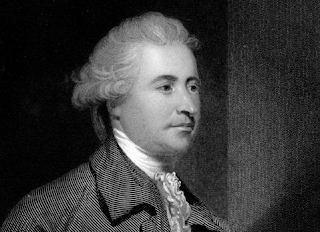
Associate with link minded peers! Edmund Burke once said; “When bad men combine, the good must associate; else they will fall, one by one, an unpitied sacrifice in a contemptible struggle.” This is as true today as it ever was, which is why doing nothing carries such a tragic cost for those too weak to dig deep and associate with linked minded peers for a greater good outcome! If you think dark self serving interests will not find you, then you are already found and under its influence. Context of situation and associated remedy is only possible through networking and peerage. Even the great “Gandalf the Grey” established a like minded peerage to succeed in life. I argue we are no different especially in today’s world.


With wealth distribution narrowing along with the tolerance for constructive dissent and sustainable business practices, thinking of the longer term consequences of our actions is as critical as it ever was! We need to carry our self past the pettiness and politics of the day to associate with like minded peers and bring back the balanced approach to love, life and the pursuit of happiness. It will carve out a sustainable future in business leaving only good intent to dwell as our proud legacy!


Sources/Credits:

Pics;

www.walldevil.com        

Credits;

Official twitter account of Sir Ian McKellen:  https://twitter.com/ianmckellen
Character Bio ‘Gandalf the Grey”: http://www.imdb.com/character/ch0000143/bio
Learned Helplessness definition: https://en.wikipedia.org/wiki/Learned_helplessness


Wednesday, 17 August 2016

Economic Upturn – Planning for Fact or Fantasy?

Planning for the future in uncertain Times…

Whether you are a multinational or a private citizen, what planning direction to go in after nearly a decade of economic and financial turmoil is a real challenge! The narrowing of wealth distribution tops the list of macro economic maladies affecting corporations and the working man alike. Unfortunately, this sets the stage for future economic crises that will carry our current problems forward should the pattern of behaviours at all levels not change.
The main considerations of anybody planning should be the direction of future activity that is beneficial to the individual and/or the organisation. It is not possible to get all things right but in general terms, the following should be borne in mind for strategising on future spending and direction:

Economy - understand economic growth that correlates to real world metrics separating statistical inconsistencies that skew the picture of growth on the ground from more accurate metrics showing the state of the economy. For example, Ireland on the ground is experiencing growth of about 3-4% GDP whereas the central statistics office reported 26% GDP over the same period. Tax Inversion has effectively distorted Ireland’s growth trajectory, which if taken at face value can lead to a dangerously positive outlook on big decisions. Economic upturn in fact can transform into fantasy. GDP against GNP, % of Sales Tax/VAT to overall tax, jobs created to unemployed registers are all good metrics. They provide a broader macro economic view of the economy where one can reasonably assess future expectations.

Politics - how stable and engaged are government in the management of the economy and its infrastructure? Also, how committed are they at stimulating growth? Is there any help for a direction you may take and how will government react if it all goes wrong for you?

Currency - will currency remain stable to positive and will capital markets pose any risk to your plans directly or indirectly via wider economy impact of currency and/or trade movements? Will the basics in life become dearer, cheaper or remain relatively stable? If in exports as a business, how will currency movements affect trade and what exposures are present in goods transit and/or associated costs? If a multinational, what capital controls are likely in territories where you have assets in the form of cash and/or manufacturing centres, etc. Are you locked in?

Risk - do you know the strengths and weaknesses of your plans? Are your risks both positive and negative cataloged by their likelihood to happen along with the impact of it actually happening?

Support - do you have what you essentially need to achieve your plans bearing the above environmental factors in mind. E.g. Are finance, logistical, educational and technical supports in place? Do you have a plan b, c and so on if unforeseen problems block your progress?

It’s not easy in our complex and sometimes volatile world to be ready for all eventualities but our chances of success only get better with understanding of the world around us through engaging with it and developing a thorough approach to planning. In times of calm, it allows us to sail better than our unplanned and unprepared peers. In adversity, it allows us to be more focused, flexible and successful in the game of life.

Sources/Credits:

Pics;


Credits;

Wednesday, 20 April 2016

What is Essential in a Great Consultant...

Good consultants in today’s world are plentiful so why are great ones hard to find?

Given today’s world and the commercial realities of supply and demand, I think it is reasonable for us to proceed with the following working assumptions:
  • Bad Consultants do not exist in the marketplace as most bad consultants burn more bridges then they build making themselves ultimately redundant. The few well connected exceptions should be set aside for purposes of this article.
  • Consultants are defined as primarily working for an agency and/or for themselves with purpose to offer consulting expertise in business areas and/or areas of IT like software, big data and infrastructure. That said, most of the below article applies globally to the consulting industry in my view.

So, a good consultant, how can he or she be defined?  Business Dictionary defines the term “Consultant” as follows:

Experienced professional who provides expert knowledge (often packaged under a catchy name) for a fee. He or she works in an advisory capacity only and is usually not accountable for the outcome of a consulting exercise.

I think this definition is a traditionally accurate and encompassing one, which has given rise to a generation of good consultants. In my view, they have the following key traits which are pointers to personality and professional standing in terms of motivation, modus operandi and cultural propensity.  A good consultant today is expert at reading any person or situation (i.e. High EQ), a prolific networker, technically savvy in their chosen area along with been expert at protecting their own interests and that of their company/agency in a tripartite situation. These impressive traits make for a good consultant but is it enough?

I don’t think so, which is why it’s so hard to find a great consultant who has that X factor trait. Personally, I think a great consultant understands and possesses the traits of a good consultant but refuses to be defined by them. He or she will balance these elements against the higher traits of strategic awareness with view to true value creation (not just “on paper gains”) , sustainable design practices and a good level of ethics. Sometimes it’s better to shake a prospective client’s hand and say goodbye rather than accept a high earning fee for a job that is setup to fail. Picture a prospective client who is convinced a problem lies in x part of their organisation whereas the problem really lies in y and z areas. This client won’t entertain the notion of been wrong; would you accept his money or just walk away? Good consultants may accept his money and find a way to mitigate the risk posed by the intrenched position, whereas great ones would care to share the reality and then walk away. Such a stance may not be good for the bottom line in the shorter term, but karma is still king and great reputations in consulting rely more on the higher strategic suite of traits when on the lower level of tactical traits every good consultant has.

So leaving what is often the easy way to one side, maybe more great consultants will rise with new motivational drivers found in these higher strategic traits rather than been purely tactical in their careers and accordingly, how they professionally define themselves. Unlocking such potential with a different view and approach to consulting would have a seriously good return for all involved in my view. What do you think? Leave your opinion today...

About the authorJohn Mulhall is a newly Minted Software Developer and Community Manager. John is also a committed blogger and from February 2016 onwards, will be publishing blogs every second week on topics around Technology, Leadership and Sustainable Capitalism.


Sources/Credits:

Pics;


Credits;

Definition of consulting:

Wednesday, 9 March 2016

Big Data - Here Today, Here Tomorrow

 Big Data Adoption, it’s really happening.. Is it time to get on board?

Technology has evolved over the last 60 years and today we continue our lightning fast journey through time with technology by our side. The term “big data” has been used by many to describe data analytics which are often compiled from spreadsheets. They say ‘(Microsoft) Excel is an accountant’s best friend’ yet it comes with a lot of limitations that cannot be overlooked in today's world. The evolving nature of current data driven decision-making at senior levels in organisations places a huge burden on departments responsible for analytics and management reports.

We as a race have produced more information in the last 2 years then we have in the last ten thousand years making data analytics in today's operating environment a real challenge.  The evolution of big data has seen technological breakthroughs in streaming, batched pipelines, distributed clusters and data centre management. If we are to capitalise on opportunities presented by big data, we need real time or near real-time streaming along with batched data ability that is indexed and easy to transform so we can analyse it producing insights in support of the management decision making process.

Here are some high level points that one should think about when considering big data as a professional and/or an enthusiast:
  • Open source with it’s democratisation is truly the king of big data. Harness the power of the open source community and collaborate in the evolution of big data that will service your needs
  • Big Data Architecture is the looking glass into the future. Think distributed computing in two ways, what works and what works for you. Scalability comes at a price... make sure your solution comes with the appropriate flexibility in partitioning and try to keep one data layer only in your big data stack.
  • Data Management should determine your security protocols ranking your data in layers of sensitivity. Ensure parity between your policies and your big data architecture. Allow this to drive things like storage solutions (in-house, cloud, hybrid), design, deployment, etc.

Data analytics and visualisation should become more “visually orientated” with a data on demand mindset. Create a higher level of abstraction based on visual filtering for your analytics suite.


Finally, when you have a working data pipeline servicing your needs through a big data stack that presents useful tools and analysis for use, make sure you use it. Package your end result in an easy to understand format with visually driven reports from one of your most valuable resources, which is the large volumes of data you collect every day! Now is the time to transform your future with big data that will not only create awareness and understanding, it will create value for your company both now and into the future.

About the author: John Mulhall is a Marketing Technologist and newly Minted Software Developer. John is also a committed blogger and from February 2016 onwards, will be publishing blogs every second week on topics around Technology, Leadership and Sustainable Capitalism.

Sources/Credits:

Pics;

Credits;



Wednesday, 3 February 2016

Land of Illusion - Our World View

When looking at the world through abstract lenses, patterns of life emerge that raise questions about we make sense of it

We all at some point love and hate life, see it in different shades of both extremes and seem to never question what we have come to take for granted. From the air we breathe to the evenly applied angles of petals on a daisy, it is simply life, part of our world, which allows us to achieve what we have set out to achieve within its boundary paths.

With the impressive march of technology and time, my own journey has been revealing more and more patterns in life. I was once ignorant of these patterns but now ponder them with excitement and interest. To explain my developing interest in the patterns of life, I often wondered how some folks do better than others after a paradigm shift in “their world”. Who adapts, who fails, who succeeds, who changes the picture completely once again??? This is man made and sits against a world that is more and more connected to itself.

So, enter nature and one begins to wonder about the patterns of uniformity and synchronicity… why do they happen? Who makes it happen? Is it part of nature’s “DNA” for it to happen? Maybe our world is bigger and wider than we once thought? The patterns and mechanics of nature are often mimicked by man, thus we have microwaves, computers, antibiotics, central heating and so on.. A profitable relationship wouldn’t you agree? What if we push the boundaries of this relationship with the world around us, within us, above us and beyond us?? What could we discover and seek to understand, which could help our children’s children on their journey through life?


Here are some of the things I think are gateway areas to future progress, creating a progressive technological window to tomorrow’s world today:
  • Quantum Computing - Eric Ladizinsky, CEO of D-Wave gave a great talk on the current progress of quantum computing at Trinity College Dublin late last year where he was able to confirm production of 1000 qubit quantum processors. An amazing breakthrough indeed. Map the progress of this technology over the next 10 years and one can expect to see parallelisation in computer processing power increase many fold within the start of a paradigm change in computer science. This positive disruption to the technologies that run our world today will open a gateway of possibilities for tomorrow’s world! Exciting times indeed!
  • DNA, Big Data and Disease - As society becomes more comfortable with the concept of mass data flows, big data analysis and genetic research, the ability to produce more and more insights leading to cures from diseases ranging from haemochromatosis to cancer will escalate the pace of medical technology innovation. At the heart of this innovation, data science will lend a critical hand in the identification of patterns and probabilities that will aid the unlocking of answers to some of mankind’s deadliest diseases.
  • Artificial Intelligence - What if every robot, mainframe and distributed cluster had its own AI controller. Imagine a core that you could converse with, understand emotions, right/wrong and then execute self augmenting programming to capture a better outcome for the process. This is a flash of what could be achieved with such technology. Responsible adoption of course is key and should lead all development projects. These outcomes can create the AI reality of the future which will positively impact society at that point.
  • Energy - Fossil fuels will soon come to pass and the experimentation with “alternative energy” is something to be explored by disrupters. The fact is that the iron grip of the energy industry over fuels will soon “run out of gas” as the ability to generate energy from solar protons via panels will become so effective, a new age of energy will arise in the quest to have self generating cells that last a lifetime and harness the power of nature to tend to the needs of man.
  • Propulsion - We need to travel to the stars. We won’t go far on a tank of gas, so with a developing understanding of the world around us, we can expect to see that new forms of energy, navigation and propulsion will be unlocked by our intrepid minds that don’t accept that status quo as fixed. The quest for knowledge and understanding is a powerful one in a universe that carries us forward with the arrow of time allowing us via entropy to never stand still.
It’s not enough to merely survive life, we must live it to understand our time here and how we fit into the world around us. If we open our hearts and minds to the possibilities that surround us, we commune with a universe that will help us find our way turning a land of illusion into a land of hope for a better day!

Sources Credits:

Pics:


Sources: