Showing posts with label Sustainable Capitalism. Show all posts

Wednesday, 14 September 2016

PROCESS DESIGN AND MANAGEMENT, WHY CUSTOMER INPUT MATTERS

Check out my second article for Irish Tech News on process design and management. Its a focus on sustainable process management as a business approach and why it matters for company sustainability in the modern world.
Check it out at:
Sources:
Photo by Stock.io at https://stocksnap.io/photo/EW161F7YQX

Wednesday, 31 August 2016

Lord of the Rings, how ‘Gandalf the Grey’ teaches us that learned helplessness is a threat in the real world

The fantasy epic Lord of the Rings takes a close look at how evil and despair seed the doom of all unless courage is found to check it! Does the “real world” need to take note?

I’m sure everybody knows the epic middle earth adventures of Frodo, Gandalf and the fellowship of epic heroes fighting the forces of the evil Lord Sauron and his cohort; the deceptively evil sorcerer Saruman!

The character Gandalf the Grey as played by Ian McKellen was a wise and powerful wizard on the side of good against such evil that corrupted the hearts of men to dominate middle earth and herald in a dark age that would have no end. In the first movie “The Fellowship of the Ring”, Gandalf was under the control of his mentor and friend “Saruman the White” who deceived and misdirected him in his quest to destroy “the Ring” of darkness that dominates all other rings given to Men, Wizards, Elves and the Dwarfs of middle earth.  

The storyline continues to a point where our hero Gandalf becomes suspicious of Saruman’s deception; confronting him in an epic battle of good versus evil. Saruman challenged by Gandalf tries to appeal to him to join him! Saruman does this by using the overarching power of Lord Sauron and how pointless it is to oppose him due to a “misguided sense of duty” to his friends and the people of middle earth. He plays on the odds of losing to try and create a sense of learned helplessness in Gandalf and weaken his resolve to oppose him. Gandalf, who appears less powerful but committed to his sense of morality cries foul of this betrayal and makes a stand regardless of the odds against him. He loses the battle but allies with other good men, elves and dwarfs to battle the dark forces opposing them, which leads our heroes to ultimate victory.

So, even in a fantasy based story like this, can we draw parallels to the real world of business? Does the use of over arching power to override core values with learned helplessness and take away hope by dominating those in important positions under such influence actually happen?

A worthy question, which is hard to answer in my view. It is definitely possible but it depends on the person, their sense of self/character, their core values and their situation in life. So here are some indicators to look out for the signs of learned helplessness and what to do in your company to be the unsung hero of the day saving it (or you!) ultimately from itself!

Be practical! Know what your company is in practice as well as on paper. Has it a hierarchical, clan, adhocracy or market culture? Where does the customer, employee, manager and leader sit in the hierarchy? Are employees engaged and listened to? Are good decisions for the greater good cheered or punished based on ethics/longer term benefit v short term cash return? If those answers are inherently negative and paint a picture where employees are treated as mindless tools in a corporate toolbox only capable of only doing their strictly enforced job descriptions, then it’s likely that learned helplessness is the only coping mechanism employees have to survive an oppressive management regime. If one reaches such an opinion from their research, it’s better to walk away from such a company, which by design eats itself from the inside out and is content with a shortened company lifecycle!

Know yourself! Be true to yourself in matters of the heart, which includes the wish to be happy! If your vocation in life lies elsewhere, giving up on where you belong because you don’t know yourself or trust your abilities is just wrong! We are all part of something bigger and will only feed the darkness by being unhappy and feeling trapped in a life we made and only we can really change! Know yourself, take responsibility for yourself and then you can change anything about your world you need to for a better future in life!

Moral Courage. A shiver goes down my spine when I think of how many times I have heard of outrageous and grievous actions taken by bad people against good people whom had leaders that lacked the moral courage to defend their people and/or position against the ill intent of the wicked! Moral courage builds your character and your reputation. It shapes your future and tests you to the ends of your beliefs and your wits! Win that inner battle and your path ahead will only get better, lose that battle and you allow the forces of darkness to roam unchallenged in a more subtle yet similar fashion to its advance in the Lord of the Rings

Priorities… where you belong. Just like the heroes of the Lord of the Rings, we should consider others before ourselves yet never stop our quest to find that place where we belong! Despite what some ‘gig economy’ proponents say, we all must find our place in this world. If working on a company’s payroll doing what you love for that company to the best of your ability, then so be it! Such a contribution is not a “cost” to any company; your above average performance is a contribution to that company as much as it is to yourself because you have found your place in life to excel at being you!

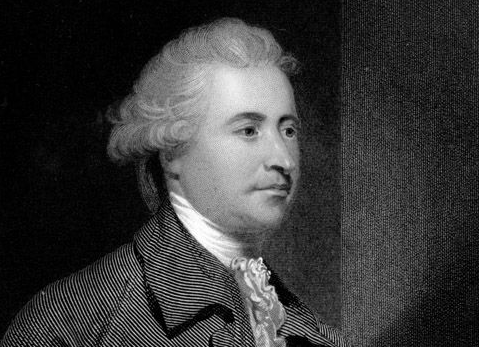
Associate with link minded peers! Edmund Burke once said; “When bad men combine, the good must associate; else they will fall, one by one, an unpitied sacrifice in a contemptible struggle.” This is as true today as it ever was, which is why doing nothing carries such a tragic cost for those too weak to dig deep and associate with linked minded peers for a greater good outcome! If you think dark self serving interests will not find you, then you are already found and under its influence. Context of situation and associated remedy is only possible through networking and peerage. Even the great “Gandalf the Grey” established a like minded peerage to succeed in life. I argue we are no different especially in today’s world.


With wealth distribution narrowing along with the tolerance for constructive dissent and sustainable business practices, thinking of the longer term consequences of our actions is as critical as it ever was! We need to carry our self past the pettiness and politics of the day to associate with like minded peers and bring back the balanced approach to love, life and the pursuit of happiness. It will carve out a sustainable future in business leaving only good intent to dwell as our proud legacy!


Sources/Credits:

Pics;

www.walldevil.com        

Credits;

Official twitter account of Sir Ian McKellen:  https://twitter.com/ianmckellen
Character Bio ‘Gandalf the Grey”: http://www.imdb.com/character/ch0000143/bio
Learned Helplessness definition: https://en.wikipedia.org/wiki/Learned_helplessness


Wednesday, 20 April 2016

What is Essential in a Great Consultant...

Good consultants in today’s world are plentiful so why are great ones hard to find?

Given today’s world and the commercial realities of supply and demand, I think it is reasonable for us to proceed with the following working assumptions:
  • Bad Consultants do not exist in the marketplace as most bad consultants burn more bridges then they build making themselves ultimately redundant. The few well connected exceptions should be set aside for purposes of this article.
  • Consultants are defined as primarily working for an agency and/or for themselves with purpose to offer consulting expertise in business areas and/or areas of IT like software, big data and infrastructure. That said, most of the below article applies globally to the consulting industry in my view.

So, a good consultant, how can he or she be defined?  Business Dictionary defines the term “Consultant” as follows:

Experienced professional who provides expert knowledge (often packaged under a catchy name) for a fee. He or she works in an advisory capacity only and is usually not accountable for the outcome of a consulting exercise.

I think this definition is a traditionally accurate and encompassing one, which has given rise to a generation of good consultants. In my view, they have the following key traits which are pointers to personality and professional standing in terms of motivation, modus operandi and cultural propensity.  A good consultant today is expert at reading any person or situation (i.e. High EQ), a prolific networker, technically savvy in their chosen area along with been expert at protecting their own interests and that of their company/agency in a tripartite situation. These impressive traits make for a good consultant but is it enough?

I don’t think so, which is why it’s so hard to find a great consultant who has that X factor trait. Personally, I think a great consultant understands and possesses the traits of a good consultant but refuses to be defined by them. He or she will balance these elements against the higher traits of strategic awareness with view to true value creation (not just “on paper gains”) , sustainable design practices and a good level of ethics. Sometimes it’s better to shake a prospective client’s hand and say goodbye rather than accept a high earning fee for a job that is setup to fail. Picture a prospective client who is convinced a problem lies in x part of their organisation whereas the problem really lies in y and z areas. This client won’t entertain the notion of been wrong; would you accept his money or just walk away? Good consultants may accept his money and find a way to mitigate the risk posed by the intrenched position, whereas great ones would care to share the reality and then walk away. Such a stance may not be good for the bottom line in the shorter term, but karma is still king and great reputations in consulting rely more on the higher strategic suite of traits when on the lower level of tactical traits every good consultant has.

So leaving what is often the easy way to one side, maybe more great consultants will rise with new motivational drivers found in these higher strategic traits rather than been purely tactical in their careers and accordingly, how they professionally define themselves. Unlocking such potential with a different view and approach to consulting would have a seriously good return for all involved in my view. What do you think? Leave your opinion today...

About the authorJohn Mulhall is a newly Minted Software Developer and Community Manager. John is also a committed blogger and from February 2016 onwards, will be publishing blogs every second week on topics around Technology, Leadership and Sustainable Capitalism.


Sources/Credits:

Pics;


Credits;

Definition of consulting:

Wednesday, 17 February 2016

US Supreme Court Decision - Why We Need to Protect our World

Fixing Environmental Disasters don’t Come Cheap…


Its an obvious statement, ‘look after our environment and our environment will look after us’. This piece of common sense is present in nearly all cultures over thousands of years yet the relative few still seem to be hell bent on breaking our environment in a state of madness that needs to be addressed.

I am of course referring to the intervention of the US Supreme court just last week that issued a decision on President Obama’s effort to empower the EPA in America and bring carbon emissions under control through enforcement. Politics is just plain crazy in America these days and I try to not listen to the barrage of extremely polarized rhetoric on all sides. It seems to stem from powerful forces in America with divergent options that not only are worlds apart, the extremes defy logic and common sense in most cases. Seriously, does anyone care about the “normal” American anymore? GIven the questionable decision of the US Supreme court last week, I guess the latest victim of runaway polarisation of US politics is the environment for our children’s children.

Needless to say, the battle of forces behind closed doors continues but to drive so forcefully against good practice is baffling to say the least. The children of the extreme right in America share the same land with the children of those who are on the left, the centre and of no political persuasion at all. By upping the game of sustainable practice, aren’t all the children of today not going to benefit? The plan is a long play after all so maybe revisiting it in this light will help… ??


In closing, I always admired the native American Indian culture for its respect of the land and the priority placed in its preservation for generations to follow. An old Native American saying comes to mind Treat the earth well: it was not given to you by your parents, it was loaned to you by your children. We do not inherit the Earth from our ancestors, we borrow it from our children.” I hope the energy industry along with the US Supreme court takes note for despite the incredible power of certain people in certain positions, we all grow old and die. What we leave behind is our legacy, which is set in the land we claim to own, but to be frank have yet to prove we love! A great place to start is supporting the efforts to protect it by political ally and adversary alike. A successful outcome will benefit all our children!

Sources/Credits:

Pics;


Credits;

Wednesday, 13 January 2016

Strategic Decision Making - Cognitive Bias V Data Driven Decision Making

What gives cognitive bias a competitive edge today.. and why data driven decision making prevents it from being a liability in tomorrow’s world

As we head into 2016, it’s natural to think of the future, what it holds and how we will fair out when it arrives! Shall our children enjoy an uninterrupted run of good luck and will our lives only get better with the success we have worked so hard for?? All very natural questions to think about in the new year yet we rarely think of the strategic decisions made by others that can impact events creating missed opportunities and/or unseen dark clouds on the horizon of our life’s path.

Thinking about this strategic review of our lives, how many of us have thought strategically about the future assuming patterns of future success based on a summation of our past experiences? How many have done so without any real interrogation of the past to see if it is feasible to repeat into the future? This oversight of thought is known as cognitive bias (aka intuitive bias), which by Webster’s definition is “Common tendency to acquire and process information by filtering it through one's own likes, dislikes, and experiences.”

Cognitive bias has its origins in evolution. We created a mental filtering system to manage the large volumes of data we receive every day and through a learning process of experience, education and observation, we developed a short cut list of actions to speed up our reaction times, which to date increase our chances of survival. Whether it’s steering clear of an angry Lion on the Savanna or under pressure in the office where we “skim” through a 200 page report by reading the 2 page bullet point summary; our ability to maintain performance under pressure relies on our ability to make lightning fast decisions that rely on prediction based on past experiences. In essence, the decision we made “successfully” in a 100 near-similar cases to date will gain favour with us over a perfect match solution someone else told us about just the other day.

So, sounds like all is well? I would agree if the decision was based on 2 minutes before work to get a Mocha Latte or an Americano coffee. However, what is the case when you have a major decision to make on strategy that affects many people along with large amounts of resources in an organisation?? After all, if you have the right man in the driving seat, then trust his gut, it’s worked this far… right?? 


My considered answer is this. The “gut call” is fine to a point but our world is changing even faster than ever. We cannot rely on even successful past experiences to solely guide our future strategic decision making. We need to embrace data driven decision making by creating a process pipeline for it; where we can evaluate a data rich and clearly presented issue(s) before reaching any swift conclusions based on our experiences, likes and dislikes (aka cognitive bias, the “gut call”). Companies who embrace data driven decision making will increasingly build a competitive edge over those who don’t for the following reasons:
  • Dynamic Markets - they change and trend even faster with the onset of the information era and if you don’t understand your customers wants and needs nearly at an individual, real-time level based on their behaviour, then you will lose out to the competitor who can
  • Impact Awareness - the age of industrialist capitalism is coming to a clear impasse where the impact of strategic decisions on staff, internal productivity, performance, regulatory compliance and social responsibility all matter as much as the impact on revenue, which in times past (and present for some companies) was the sole consideration. The need for transparency and accurate insights by mapping the impact of strategic decisions is increasingly more important than ever
  • The Disrupter Effect - the information age has levelled the playing field to a great extent for new tech start ups who have proven to be vibrant, savvy and able to disrupt pre-existing non tech industries. Apple’s disruption of the music industry is a classic example of this. Microfinance based start ups like Grid Finance shows great disruption potential to the retail arms of banks and lower level investment companies providing a direct investor - beneficiary platform at a fraction of the cost a bank or investment company would take in fees and/or equity
  • Faster to Market - the onset of the information era and web 2.0 technologies (cloud) has made it possible to develop and bring to market new products in a fraction of the time to times past. The effect of this in the marketplace is felt by shortening the cycle of new product generation, which in turn is making product life-cycles shorter and more prone to disruption
Staying ahead of the information game is becoming increasingly more dynamic, harder to predict especially if the decision maker has no access to data when making the decision.That said, as the onset of technology has driven the information era and the rise of disruption. It also drives the data driven decision making approach, which companies can now use to their competitive advantage. Companies wanting to embrace it are well advised to consider the following:
  • Risk Management - develop risk management structures for enterprise that cover your risks in the main areas of business, finance (including FX) and operations. Use tools like risk registers, risk mapping, scenario planning and risk assessments in all major strategy decisions.
  • Data Management - a data management platform should be built and structured so as you know how to get to your data in a highly available state, retrieving what you want, when you want.
  • Process Management - process management structures should be easily maintained, executed, highly effective and auditable via control points in the process flow that feeds into metrics for the business. This should be automated to the extent that it is feasible based on company size and data quality. If the control points don’t enforce data quality, then they need to be revised until they do.
  • Predictive Analytics - transactional data feeding analytical data sets is one of the biggest tools one can get in the modern era. That said, if a robust process management structure does not guarantee good quality data sets, then predictive analytics will produce no qualitative analysis. The need to get the quality and structure of your data sets right from input to analysis cannot be overstressed. It’s the basis of a value creating “data pipeline.” 


Technology is marching ahead at strength in all areas above, which is why a business considering how they make their senior level decisions should be considering the above points plus more to create an infrastructure of awareness that will make the enterprise more able to meet dynamic markets and act and/or react in time to build upon prior success into an ever uncertain future. The future is here, do you use a data driven approach to decision making? Do leave a comment with your thoughts...


Sources/Credits:

Pics;


Credits;


Thursday, 26 June 2014

Communication, do we really mean what we say?

How the science is eclipsed by the art of communication...


We all love to communicate, it’s a part of who we are as human beings and is more deeply inset into our success as a species then we would think. Why? The answer is simple… we take it for granted. After all, who really thinks about one of our greatest evolutionary gifts in detail as we advance through childhood and onto adulthood launching a career or multiple careers? The art of communication is developed as we go and only a few think about the science that describes the process of communication, which we engage in, on a daily basis.

BusinessDictionary.com describes communication as “Two-way process of reaching mutual understanding, in which participants not only exchange (encode-decode) information, news, ideas and feelings but also create and share meaning.” The process can be set out as follows:

Sender encodes transmission>>>Sender transmits message>>>Receiver receives message>>>Receiver decodes transmission.

This is true for all types of messages over all types of mediums such as a face-to-face conversation, a phone conversation, an email, a letter, a text, a social media post, a media article, etc. In the definition of communication, its good to note that there are two main types of communication that are in every message we send. They are verbal communication and non-verbal communication. Verbal communication is described as “The sharing of information between individuals by using speech.” Non-verbal communication is described as Behavior and elements of speech aside from the words themselves that transmit meaning.”

In non verbal communication, tone, posture, pitch, hand gestures, use of capitals/bolds/italics/colours/pictures (in written communication mediums) is all relevant to how the receiver receives, decodes and understands the entire message, both verbal and non verbal in content/meaning. When we look at it this way, we can see how even a blog article on communication has a two way communicative characteristic by the way the article is written in content and meaning to how the reader decodes the article. Do all readers get the same meaning and content? I hope so…. but the wider the audience the more impacting subtle inferences of non verbal communication are in the receiver’s decoding of content and meaning. So folks, I guess I need to get this one right then!

Figure d) Communication Styles Chart


As you can see, whilst we are all unique, we do fall into some situational categories when it comes to what style to adopt in our approach to people both in the workplace and in life. The need for mutual understanding is critical in all meaningful communication and thus I submit it should be a key metric in measuring effective communication. If absent, then meaning is also forgone in the message and a message without meaning is not an effective message at all. 

In my professional experience to date, I have experienced issues with communication, knowing when to speak up, hold my silence, etc. There is so much more learnt by experience thus I think it is fair to say that emotion is embedded in all communication driving ‘our communicative art’ over time. In a sustainable world, our ability to recognise emotion for its ever present value and vice is an inherent part of our success and/or failure given the subtle yet impacting influences it has on our ability to communicate and perform on a daily basis.


Figure e) Emotional Communication Wheel


I would offer the following pointers on communication to further the cause of effective communication for all.

Small talk matters. Small talk in in the work place is like walking on hot coals for some. Be that as it may, small talk has proven to be key to group successes big and small, so the next time someone asks you about your weekend, take two minutes at the water cooler to talk to them about theirs and what’s going on in the office. Its small but can aggregate positively to the overall level of group cohesion and performance/success potential within the group.

Watch your body language. Non-verbal communication is a bigger deliverer of meaning then the verbal content of any conversation. Body language showing emotions like anger, joy, sadness, happiness, which contradict your message’s content, inhibits the impact of the content and creates confusion for the receiver whom is having trouble decoding meaning from your message. Unify your message; encode your body language to be consistent with your content, which increases the efficacy of your message with the receiver. As a side, if your situation becomes confrontational and your counter party is aggressive, ensure your body language doesn’t naturally become aggressive in response… always respond to aggression with assertion!

Contextualise what you don’t understand. It is only human that you receive a message you don’t understand at some point. When you do, try to not make assumptions about the sender’s motives and meaning. If you don’t understand, ask the sender for clarification as to message context and what was meant by any content that you don’t understand. Albert Einstein once said, “If you cannot explain it simply, then you don’t understand well enough”. He is right, so don’t be afraid to reach out for clarification and contextualise the message ensuring mutual understanding is reached which after-all is the goal of the message.

Communicate collaboratively even in conflict. Too many people think conflict is an exercise leading to a ‘win-lose’ outcome. The fact is that this is an outdated and to be frank inward view of conflict which needs to be updated for companies and employees alike to suffer less as a result of it. A company will have a company culture and set of business practices for conflict but what has being proven in studies and experience going back over decades is that the more collaboratively you communicate in conflict, the better the chances of a successful outcome. Try to lean on a ‘win-win’ approach and communicate collaboratively based on interest based negotiation principles where you seek the goals and objectives of the other side, and explore ways to make it happen whilst not compromising your goals and objectives. The compromise comes on points of contention that arise in the process with mutually agreed outcomes on a ‘win-win basis’.

Never dilute a strong point with a weak follow up. Did you ever make a great point and wish you had just stopped talking at that point? I know I have done so and thus always try to focus on how I am going to communicate in terms of approach and content. What works for me is flagging these points in my head before I enter the conversation/negotiation. This allows me to keep them as content milestone markers in my communication, thus the conversation stays relatively on track and the milestone marker points deliver the essence of what I would have needed to say.

A stitch in time saves nine! Communication is about balance, when to act and when to not. The absence of communicative action is an act of communication in itself. Too often in organisational settings, the impulse to evaluate a possibly contentious situation using inward facing rationale leads to one accommodating the individual whom may be loud, brash and aggressive in their position on a point which you know is wrong but accommodate it anyway. This presents an opportunity cost dilemma that may come back to haunt the organisation in times to come. If you feel you need to speak up, then speak up based on the facts, communicate clearly and keep emotive responsiveness under control especially if the brash colleague decides to challenge your points which is often done as a defensive measure. Try to ensure the opportunity cost of assertion in a timely manner does not exceed the opportunity cost of accommodation for the company over time.


We all wish we had more time to take things back and redo them if we could, but the arrow of time does not afford us such luxuries, thus leaving us with the tools and measure of our experience by which to navigate one of the most critical and long serving aspects of human existence which is communication. A sustainable world relies on it… a bright future depends on it…

Source Links/Credits:

Definitions;
a) Communication
b) Verbal Communication

c) Non verbal communication

d) Communication Styles Chart

e) Emotional Communication Wheel


#Communication, #Sustainable Capitalism, #Sustainable, #Organisational, #HR, #People, #Company Culture, #Development